Common Concrete Batching Plant Problems and Troubleshooting Guide
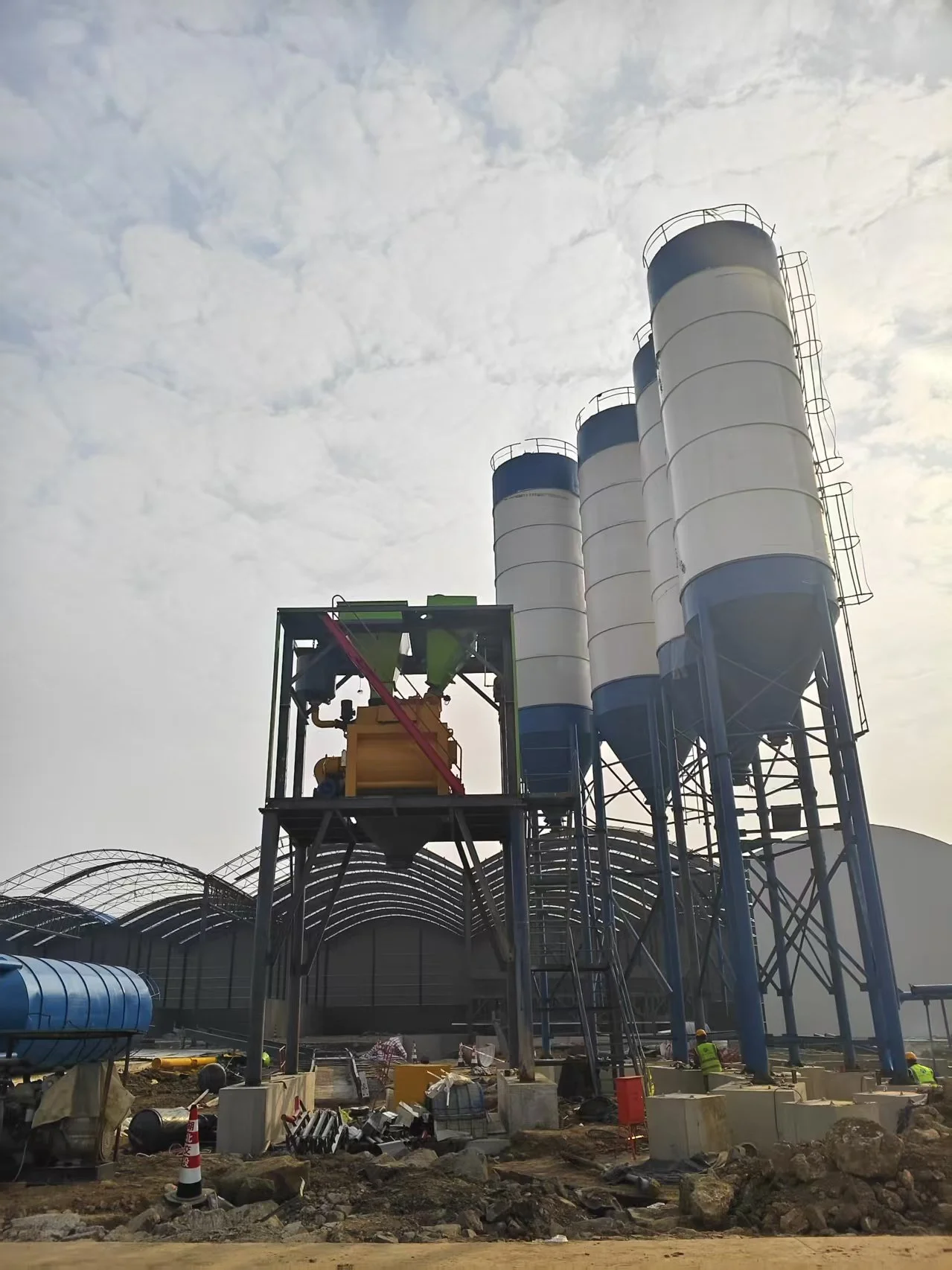
Every concrete batching plant operator encounters problems. The difference between a 30-minute fix and a 3-day shutdown is knowing where to look first..
Why Is Your Batching Plant Having Inaccurate Material Weighing?
Inaccurate Weighing
- Load cell damage or drift –most common cause
- Material buildup on the weigh hopper
- Mechanical binding –a cable or hose touching the weigh hopper
- Moisture in load cell junction box
- Check for physical contact between the weigh hopper and surrounding structure
- Clean the weigh hopper of all material buildup
- Perform a zero calibration, then a span calibration with test weights
- Check load cell junction box for moisture –dry with compressed air if needed
- If error persists, test each load cell individually to find the faulty one
What Causes Mixer Motor Overload and Tripping?
–Mixer Motor Trips
- Worn mixing blades creating excessive drag
- Too much aggregate in the mix
- Low voltage supply
- Motor bearing wear
- Material buildup inside the mixer drum
- Check blade-to-liner gap –adjust if less than 3 mm or more than 8 mm
- Verify mix design proportions –reduce aggregate if needed
- Measure voltage at motor terminals during operation –voltage drop should not exceed 5%
- Check for concrete buildup inside the mixer –chip out if present
- Inspect motor bearings –listen for grinding noise; replace if worn
Why Is Your Mixer Discharge Slow or Incomplete?
🔄 Slow Discharge
- Pneumatic cylinder weak or leaking
- Discharge gate track worn or misaligned
- Hardened concrete on gate sealing surfaces
- Low air pressure (below 0.6 MPa)
- Check air pressure at the cylinder –should be 0.6–0.8 MPa
- Clean hardened concrete from gate and sealing surfaces
- Check cylinder rod for scoring or bending –replace if damaged
- Adjust gate track alignment if it binds
What Causes Cement Silo Bridging and Arching?
⚠️ Silo Bridging
- Cement stored too long –compacts and forms a bridge
- Moisture in the silo –cement hardens at the outlet
- Insufficient aeration in fluidized silo bottoms
- Damaged or clogged silo discharge cone
- Tap the silo cone with a rubber mallet (never steel –can damage the silo)
- Activate the aeration system if equipped
- Use a vibrator on the silo cone (if available)
- If bridging persists, the silo may need internal inspection and cleaning
- Prevention: always use cement within 2–4 weeks of delivery and check air filter/dryer function
How to Fix Conveyor Belt Slippage or Misalignment?
Belt Slippage
- Insufficient belt tension
- Worn or dirty drive pulley lagging
- Material buildup on return rollers
- Uneven loading of material on the belt
- Adjust belt tension –2–% sag between idlers is correct
- Clean the drive pulley surface and check lagging condition
- Clean all return rollers and idlers of material buildup
- Adjust tracking rollers to center the belt
- Ensure the feed chute deposits material centered on the belt
Why Does Your PLC or Control System Freeze or Show Errors?
💻 PLC Errors
- Dust and heat inside the electrical cabinet
- Loose communication cable connections
- Electrical noise from nearby high-power equipment
- Corrupted PLC program or parameter settings
- Check cabinet temperature –install additional ventilation if over 40°C
- Clean cabinet with compressed air –dust causes static interference
- Tighten all terminal connections and check cable shielding
- Restart the PLC –if the error returns, restore from the last backup
- Check all sensor connections –a faulty proximity sensor can lock up the PLC
What Causes Water Dosing Inaccuracy in Batch Plants?
💧 Water Meter Issues
- Faulty water flow meter
- Partially clogged water line or nozzle
- Moisture in aggregates not compensated
- Water pump pressure fluctuations
- Calibrate the water flow meter against a known volume
- Clean water line filters and spray nozzles
- Verify aggregate moisture sensors are working
- Install a pressure regulator on the water line if pressure varies
| Problem | Most Likely Cause | Fix Time |
|---|---|---|
| Inaccurate weighing | Material buildup on hopper | 15–20 min |
| Mixer overload | Worn blades / buildup | 1–2 hours |
| Slow discharge | Low air pressure | 10–20 min |
| Silo bridging | Compacted cement | 30 min –2 hours |
| Belt slippage | Insufficient tension | 15–5 min |
| PLC errors | Dust / overheating | 30 min –2 hours |
| Water inaccuracy | Clogged nozzle | 15–20 min |
How Can You Prevent Common Batching Plant Problems?
- Keep a log of all faults –patterns reveal developing problems
- Train operators to recognize early warning signs
- Maintain a spare parts inventory: fuses, load cells, sensors, belts
- Schedule quarterly PLC program backups
- Use genuine spare parts –aftermarket causes 2x more issues
"An operator who knows how to troubleshoot is worth their weight in gold. In our experience, 70% of plant breakdowns can be resolved by the site team without external help –if they know what to check." –HZSMOVE Technical Support
Frequently Asked Questions
What should I check first when the batch weights are off?
Usually it is not the load cell itself. Look for material buildup on the weigh hopper, or a cable or air hose resting against it - either one throws the reading off. Clean the hopper, make sure nothing touches it, then do a zero calibration followed by a span calibration with test weights. If the error is still there, test each load cell on its own to find the faulty one.
Our mixer trips on stiff mixes. Is the motor finished?
Normally not. Check the blade-to-liner gap first: under 3 mm creates drag, over 8 mm leaves unmixed material. After that look at motor bearing wear, concrete baked inside the drum, and supply voltage - a drop of more than 5% at the motor terminals while mixing is enough to trip the thermal relay.
The auger turns but no cement comes out. Is the auger broken?
That is almost always bridging or arching rather than the auger. Cement stored too long compacts and forms a bridge above the outlet. Tap the cone with a rubber mallet - never a steel hammer, it damages the cone - and run the aeration or vibrator if the silo has one. Going forward, use cement within 2 to 4 weeks of delivery and keep the silo air filter and dryer working.
How long does a typical fault keep us down?
Most of the faults in this guide are same-shift repairs. Weighing errors take 15 to 20 minutes, slow discharge 10 to 20 minutes, silo bridging and PLC faults 30 minutes to 2 hours, and mixer work involving blade adjustment 1 to 2 hours.
How much of this can our own team fix without outside help?
In our experience about 70% of breakdowns are solved on site without external help, as long as the operator knows what to check. Two habits make the difference: keep a log of every fault, because patterns show up before a failure does, and back up the PLC program quarterly so a corrupted program costs minutes instead of days.
Do we have to buy original parts, or can we use local aftermarket ones?
Our field experience is that aftermarket parts cause roughly twice as many follow-up problems, and the damage shows up mostly on load cells and sensors where small calibration differences matter. Practical answer: keep a small stock of what actually stops the plant - fuses, load cells, proximity sensors, belts. We supply conveyor parts, silo and cement system parts, mixer parts, and weighing and batching sensors.
Can someone help us remotely if we cannot find the fault?
Yes. Our technicians work through it with your operator remotely, and we come on site for the cases that need it, including emergency call-outs. Send a photo of the fault screen and the alarm log to info@hzsmove.com or WhatsApp +86-18768888850 - those two things save the most time.
Need Expert Troubleshooting Help?
Our technicians can diagnose and fix any batching plant issue remotely or on-site. Available for emergency call-outs.
Request Technical SupportContact us: info@hzsmove.com | WhatsApp: +86-18768888850